What is RAKUGO
Rakugo, as a global art.
Abstract Rakugo to its very essence — what remains? From that question, Tozaburo Yanagiya is carrying RAKUGO to the world.
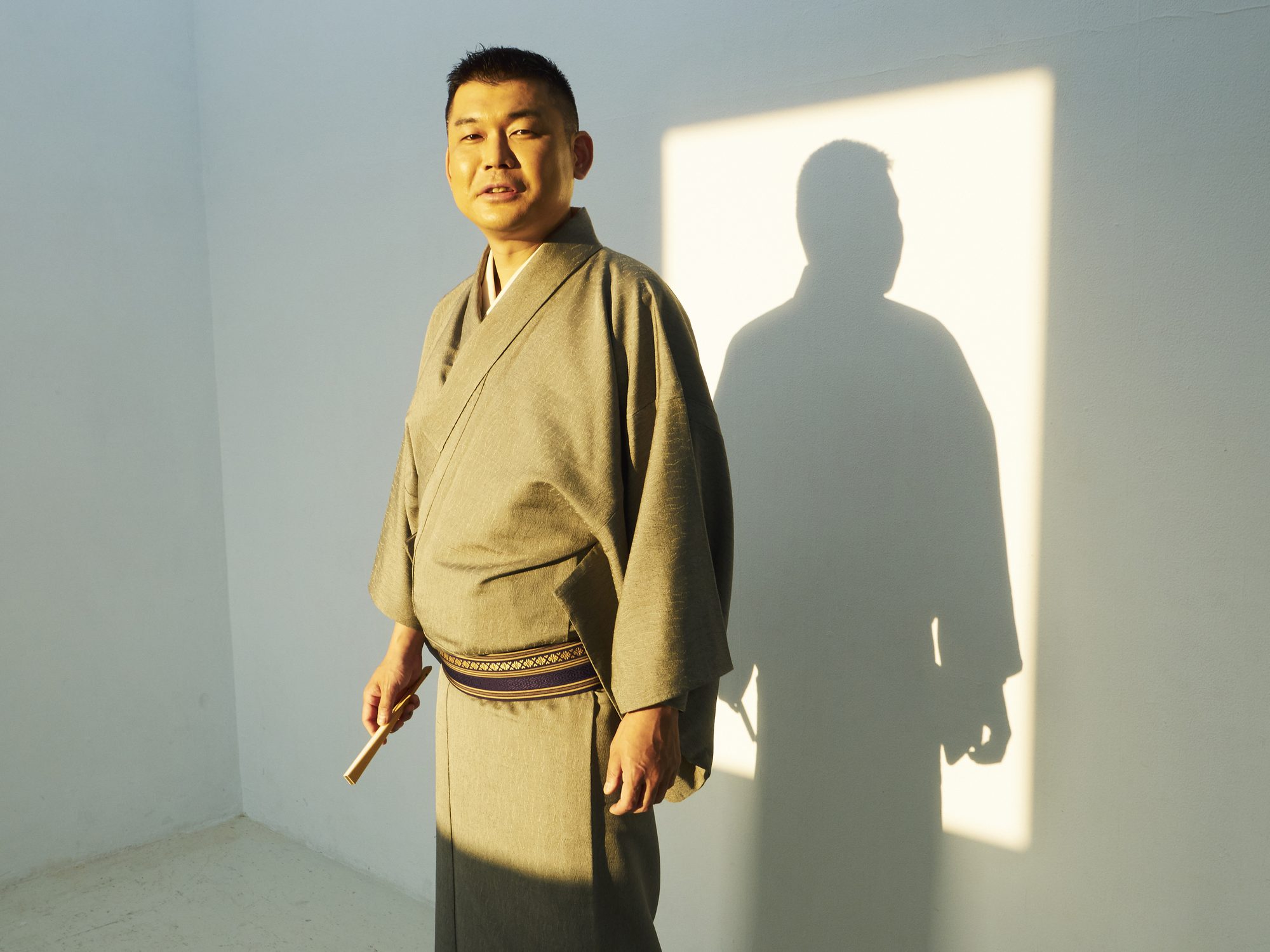
- One performer, alone
- Dressed so any role looks natural
- Carries a story
- Turning left and right to play every part
- A fan and a cloth standing in for everything
What is Rakugo?
Rakugo is a Japanese art of storytelling dating back to the Edo period. Seated in kimono on a cushion, the performer has no set, no cast, and no costume changes. With only a fan and a hand cloth — and a turn of the head to left and right — a single storyteller plays the merchant, the lord, the child, even the ghost.
Most stories are comedies of ordinary people, their foibles and their warmth, landing on a final twist — the "ochi" — that brings the house down. That structure is a blueprint for laughter, refined over three and a half centuries.
RAKUGO, redefined
Even the forms we call "classical" and take for timeless tradition are, in rakugo's long history, quite recent rules. Rakugo has always changed with its age. So to carry it into the world, there is no need to inherit the guild customs of Japan's rakugo establishment — or so Tozaburo Yanagiya believes.
Its core — one person performing everything, needing neither set nor a shared language — turns out to work anywhere. Against stand-up comedy, this is RAKUGO, told sitting down: a "sit-down comedy."
The rivals are outside the greenroom
When you carry RAKUGO to the world, your competition is not your fellow performers. It is Netflix. The NBA. Shohei Ohtani. The World Cup. The real contest is for people's time and attention.
So you leave the confines of the Japanese language and row out into the blue ocean of English. That is how RAKUGO wins its place in the world.
RAKUGO as learning
RAKUGO is an art to hear — and an art to learn. Hearing a line, reading it, saying it aloud: three of the four skills of second-language learning are sharpened simply by performing rakugo. Speaking at length before others, shyness falls away and presentation improves.
Tozaburo Yanagiya teaches rakugo every week to more than twenty children — from Harvard, Yale, and Cornell to small weekend schools. Called "master," he thinks of himself as "a senior who's just a little better at rakugo." He never scolds, never talks down, and treats children and adults alike — everyone simply "plays with rakugo" together. That is the new RAKUGO classroom.
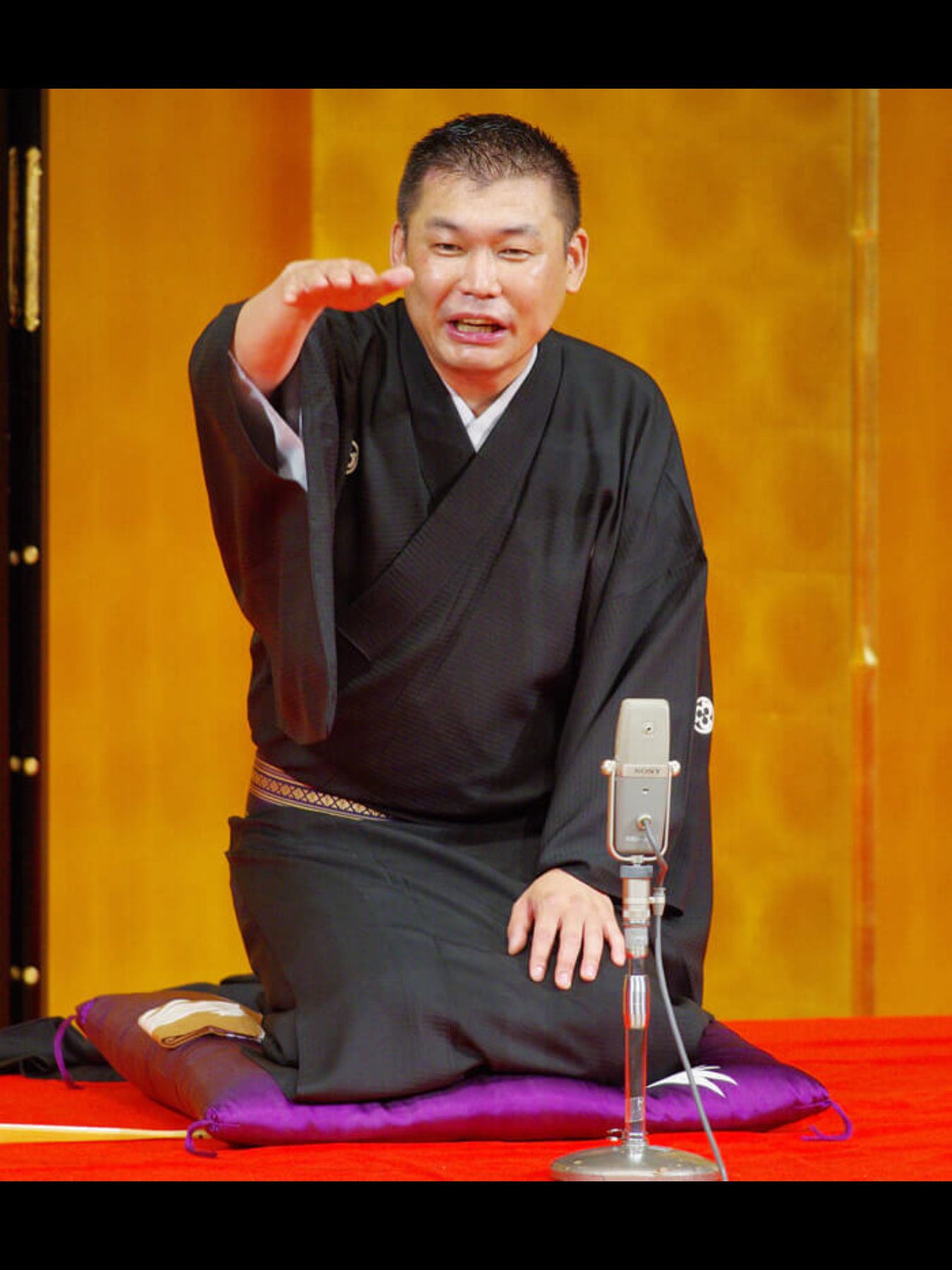
The rival isn't a fellow performer. It's Netflix — and Shohei Ohtani.
Learn RAKUGO online
Online classes for kids and adults are in preparation. Join the list for the latest.